

Table of Contents
- Quick Comparison: 5 Best Electric Scooters for Commuting in 2026
- How to Choose an Electric Scooter for Commuting
- 1. DriveTron DT01: Best Budget Commuting Scooter
- 2. DriveTron DT08: Best Value for Money
- 3. DriveTron DT10 Single-Motor: Best for Smooth City Rides
- 4. DriveTron DT10 Dual-Motor: Best for Speed and Hills
- 5. DriveTron Nova Edition: Best High-Performance Commuter
- Electric Scooter Battery Range Explained
- Frequently Asked Questions
Last Updated: September 27, 2026
Quick Comparison: 5 Best Electric Scooters for Commuting in 2026
The best electric scooter for commuting in 2026 balances range, weight, and braking power against your daily route. For most urban riders, the DriveTron DT08 wins: a 500W rear-wheel motor, 25-37 miles of estimated range, and 10-inch tubeless tires at $549.99. This guide from Next Pair Rides breaks down five DriveTron models across every budget and commute length.

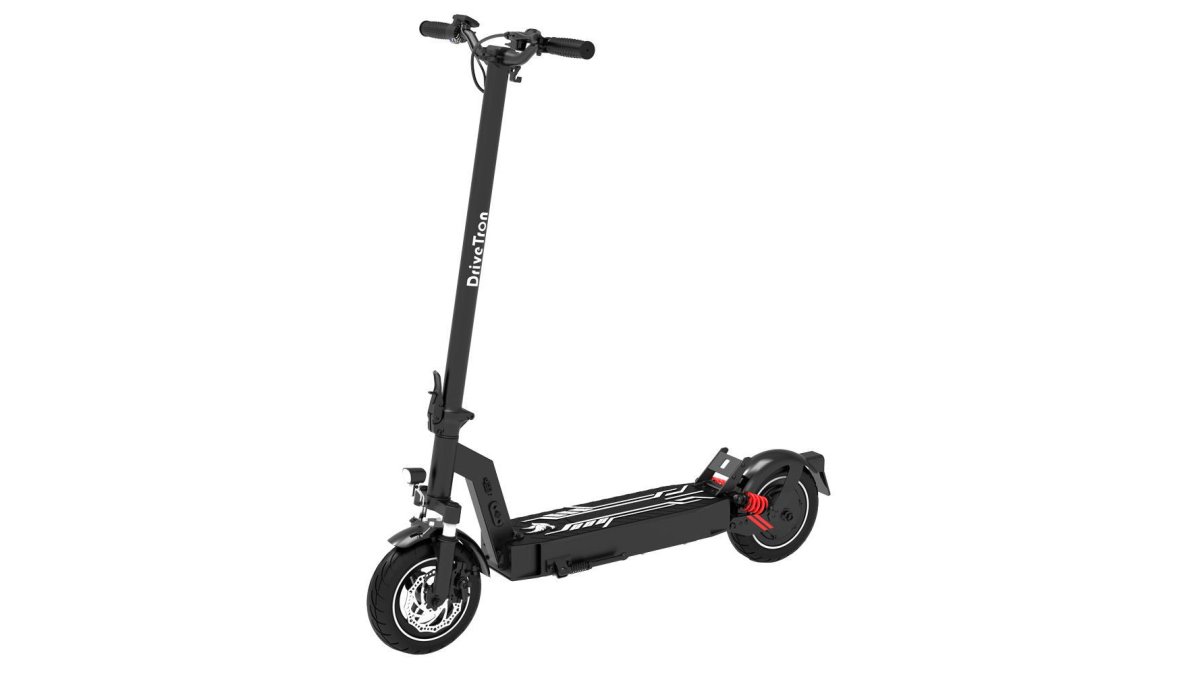
Here's the full lineup at a glance:
| Model | Motor | Top Speed | Est. Range | Weight | Price |
|---|---|---|---|---|---|
| DT01 | 400W | ~19 mph | 19-25 mi | 40.8 lb | $449.99 |
| DT08 | 500W | ~25 mph | 25-37 mi | 48.5 lb | $549.99 |
| DT10 Single | 1,200W | ~34 mph | 28-40 mi | $749.99 | |
| DT10 Dual | 2,700W (dual) | ~43 mph | 37-50 mi | $999.99 | |
| Nova Edition | 2,800W (dual) | ~47 mph | 37-50 mi | $1,299.99 |
How to Choose an Electric Scooter for Commuting
Choosing a commuting scooter means matching four specs to your route, motor wattage for hills, battery capacity for distance, tire type for road quality, and folded weight for stairs and transit. Most buyers get this backwards: they pick a scooter, then discover it doesn't fit their train, building, or city's rules.
Match the scooter to your actual commute
Before comparing models, answer these four questions about your route:
- Distance each way. Under 5 miles, 5-10 miles, or 10+ miles. This sets your minimum battery capacity.
- Elevation gain. Flat, rolling, or a single steep bridge. This decides single vs. dual motor.
- Last-leg mode. Do you ride door-to-door, or fold and carry onto a train, bus, or up stairs? This decides weight and fold time.
- Storage. Where does it live at home and at work, closet, stairwell, bike room, or under a desk? This decides folded footprint.
Legal and regulatory compliance
Rules vary by city, state, and even by street. Before you buy, confirm:
- Speed limits on shared paths and bike lanes. Many municipalities cap assisted speed well below what a performance scooter can deliver, and some require you to use a speed limiter in certain zones.
- Sidewalk vs. bike lane vs. street. Some cities ban scooters from sidewalks entirely; others require them. Riding in the wrong lane is a ticketable offense in many jurisdictions.
- Helmet and age requirements. Helmet laws for scooter riders vary by age and location, and some cities require them for all riders.
- Registration, insurance, and licensing. A few jurisdictions treat higher-power scooters like mopeds, which can trigger registration or insurance requirements.
- Building and employer policies. Many offices and apartment buildings restrict where scooters can be stored or charged, and some ban lithium-battery charging indoors.
Public transit integration
If your commute mixes riding with trains, buses, or subways, folded dimensions and weight matter more than top speed. Three numbers to check:
- Folded weight. Under 40 lb is manageable for most riders on stairs and escalators; 45-50 lb is a two-hand carry; above 50 lb, expect to use elevators or avoid stairs entirely.
- Folded dimensions. Compare against your transit agency's published carry-on size limits, which many systems enforce for scooters during peak hours.
- Fold time. A stem-folding latch that takes 5 seconds is fine for occasional use; if you fold twice a day, five days a week, a slow or stiff mechanism becomes a daily frustration.
Security and anti-theft
Commuting scooters are high-theft targets: portable, valuable, and often left in predictable places. Before buying, decide how you'll secure it:
- Integrated locks. Some models include a built-in cable or frame lock; most don't, so budget for a quality U-lock or chain.
- GPS tracking and alarms. Aftermarket trackers and motion alarms are common add-ons; a few premium scooters ship with them built in.
- Locking points. Check that the frame has a solid anchor point, folding stems and thin deck edges are easy to cut through.
- Where you'll park. A locked bike room is safer than a sidewalk rack; if you must park outside, plan for a lock that resists angle grinders.
Weatherproofing and all-weather riding
If you ride year-round, water resistance matters. Look for an IP rating: IPX4 or higher handles splashes and light rain, IPX5 and above tolerates heavier spray. Beyond the rating:
- Tire tread and compound. Tubeless tires with a tread pattern grip better on wet pavement than slicks.
- Braking in the wet. Disc and hydraulic brakes lose some bite when wet; drum and electronic brakes are more consistent in rain. Test your stopping distance in a safe area before you rely on it in traffic.
- Fender coverage. A rear fender that actually covers the wheel keeps spray off your back and off the deck.
- Battery and controller sealing. Water ingress is the most common cause of premature electronics failure; if the manufacturer doesn't publish an IP rating, assume it's not rain-ready.
1. DriveTron DT01: Best Budget Commuting Scooter
The DT01 is the right first scooter for short, flat commutes and campus riding. Its 400W motor and 36V 10.4Ah battery deliver a manufacturer-rated top speed of roughly 19 mph and an estimated 19-25 miles per charge.

2. DriveTron DT08: Best Value for Money
The DT08 is the sweet spot in this lineup. A 500W rear-wheel motor pushes roughly 25 mph, and the 36V-class battery stretches the estimated range to 25-37 miles, enough for most round-trip commutes without a mid-day charge.
3. DriveTron DT10 Single-Motor: Best for Smooth City Rides
The DT10 Single Motor steps up to a 1,200W motor and a 52V 18Ah battery, rated near 34 mph with an estimated 28-40 miles per charge. Front and rear suspension is the real upgrade: it smooths cracked asphalt and expansion joints that rattle lesser scooters.

4. DriveTron DT10 Dual-Motor: Best for Speed and Hills
Two 1,350W motors give the DT10 Dual 2,700W rated and 3,800W peak, what you want for steep grades or heavier loads. Rated top speed sits near 43 mph, with an estimated 37-50 miles per charge from the 52V 20.8Ah battery.
5. DriveTron Nova Edition: Best High-Performance Commuter
The Nova Edition is the flagship. Two 1,400W motors total 2,800W rated and 4,000W peak, driving a 60V 23.4Ah battery to a rated 47 mph and an estimated 37-50 miles per charge.
Electric Scooter Battery Range Explained
Battery range is an estimate, not a promise. Manufacturer figures assume a lighter rider, flat terrain, mild weather, and moderate speed. Real-world mileage drops when you climb hills, ride into wind, or run the throttle hard, and further in cold weather, with a heavy backpack, or with underinflated tires.
What actually drains your range
Manufacturer range figures are usually measured at moderate assist on flat ground. In daily commuting, the biggest range killers are:
- Speed. Range falls off sharply above roughly 20 mph because aerodynamic drag rises with the square of speed. Cruising at 15 mph instead of 25 mph can meaningfully extend a charge.
- Hills and stop-and-go traffic. Every acceleration event draws a burst of current; a route with 20 traffic lights uses more battery than the same distance on an open path.
- Rider and cargo weight. Heavier riders and loaded backpacks reduce range, which is why weight capacity and range are linked specs.
- Tire pressure. Underinflated tires increase rolling resistance and quietly cut range. Check pressure weekly.
- Temperature. Lithium-ion packs deliver less usable capacity in cold weather (pubmed.ncbi.nlm.nih.gov). If you commute year-round in a cold climate, plan a buffer between your route distance and the scooter's estimated range, and store the scooter indoors when possible.
- Battery age. Capacity fades gradually over hundreds of charge cycles, so a two-year-old pack won't match its day-one range.
Charging time and daily routine
Charging time scales with capacity: 4-6 hours on the DT08, 5-7 hours on the DT01, longer for 52V and 60V packs. Charging overnight solves this for most commuters, but the routine matters:
- Charge where you store it. If your building bans indoor lithium charging, plan for a garage outlet or a removable-battery model.
- Don't habitually drain to zero. Lithium packs last longer when kept between roughly 20% and 80% for daily use, with an occasional full charge to balance the cells.
- Avoid charging a hot pack. Let the scooter cool for 20-30 minutes after a ride before plugging in, especially in summer.
- Store at partial charge. If you won't ride for weeks, leave the pack around 50-60% rather than full or empty.
- Match the charger to the pack. Using the wrong voltage charger can damage the battery or create a fire risk; only use the charger that shipped with the scooter.
How to test your real range before you commit
You don't need a lab to estimate true range. Pick a known route, note the starting battery percentage, ride at your normal speed and assist level, and note the percentage on return. Repeat on a cold day and a warm day, the gap is your weather buffer.
Frequently Asked Questions
What are the best electric scooters for commuting in 2026?
The best commuting scooters for 2026 balance range, portability, and power. The DriveTron DT01 offers a lightweight 40.8 lb frame with 19-25 miles of range for budget-conscious riders. The DT08 adds a 500W motor and 25-37 miles of range. For longer commutes, the DT10 Dual-Motor delivers 37-50 miles, and the Nova Edition provides 47 mph top speed with hydraulic brakes. Choose based on your daily distance, terrain, and storage needs.
How do I choose an electric scooter for city commuting?
Start with your round-trip distance and add 30% buffer for hills, cold weather, and detours. Check motor wattage for incline climbing ability, tire type for ride quality, and scooter weight if you carry it on transit. The DriveTron DT08 at 48.5 lb with a 500W motor handles moderate hills and 25-37 miles. For heavier riders or steep routes, a dual-motor model like the DT10 Dual-Motor provides 2,700W total power and 265 lb capacity.
How does weather affect electric scooter battery range?
Cold temperatures slow the chemical reactions in lithium-ion batteries, reducing maximum range by 10-25%. Hot weather above 95°F can also degrade range and battery health over time. The DriveTron DT01 and DT08 both use 36V systems. Store your scooter indoors, charge at room temperature, and expect the lower end of the estimated range in extreme heat or cold.
Are electric scooters worth it for daily commuting in 2026?
For commutes under 15 miles each way, electric scooters cut travel costs and avoid traffic. The DriveTron DT10 Single-Motor covers 28-40 miles per charge with a 4-6 hour charging cycle, costing pennies per mile compared to fuel or rideshare. Maintenance is minimal: check tire pressure weekly, keep the deck clean, and charge between 20-80% for battery longevity. They fold for storage at your desk or on transit.
What maintenance tips keep a commuting scooter running reliably?
Check tire pressure weekly, as 10-inch tubeless tires on the DT01, DT08, and DT10 models lose air slowly. Clean the deck and folding mechanism monthly to prevent grit buildup. Charge between 20-80% for daily use and fully charge once a month to balance cells. Inspect brake pads every 200 miles. Store indoors to protect the battery from temperature swings. These habits extend battery life and prevent flats.
Your commute shouldn't depend on guesswork. Next Pair Rides builds its lineup around the specs that matter for daily riding: 10-inch tubeless tires, dual-motor options for hills, and battery capacities that cover real distances. Compare the DT08's value, the DT10 Dual's climbing power, and the Nova Edition's hydraulic brakes, then pick the model that matches your route. Continue shopping with Next Pair Rides to find your daily ride.