

Table of Contents
- The Real Pros and Cons of Buying an Electric Scooter
- The Cost of Owning an Electric Scooter: Upfront vs Ongoing
- Electric Scooter Range vs Battery Capacity: What the Specs Actually Mean
- Electric Scooter Maintenance Tips to Extend Its Lifespan
- Legal Status, Safety Gear, and Insurance You Need to Know
- Theft Prevention and Long-Term Battery Degradation Costs
- Conclusion: Who Should Buy an Electric Scooter?
- Frequently Asked Questions
Last Updated: September 25, 2026
The Real Pros and Cons of Buying an Electric Scooter
Is it a good idea to buy an electric scooter? For most urban commuters traveling under 10 miles each way, yes, it is. An electric scooter is a compact, battery-powered personal vehicle designed for short-distance travel, typically covering 15 to 40 miles per charge depending on the model. At Next Pair Rides, we see riders cut their commute costs and skip traffic congestion entirely, but the decision hinges on matching the machine to your actual route, weight, and storage situation.
Here's the honest version most buying guides skip: an electric scooter solves the last-mile problem brilliantly and solves almost nothing else. It won't replace your car for grocery runs or rainy days. What it will do is turn a 35-minute bus-and-walk commute into a 12-minute ride.
Below, we break down the real pros and cons, the total cost of ownership, and who should actually buy one.
Where Electric Scooters Win
Commuting efficiency is the headline benefit. A foldable scooter collapses in seconds and travels with you onto trains, into offices, and up apartment stairs, something no bicycle manages as cleanly. For a campus student or a commuter covering two to five miles, the time savings add up fast.
Cost savings versus public transport compound over months. No fares, no parking fees, and charging costs a fraction of a tank of fuel.
- Portability: Folds to fit under a desk or on a train rack
- Speed: Gets you across campus or a city center quickly
- Cost: Minimal per-mile running cost after purchase
- Green: Zero tailpipe emissions on every trip
Where They Fall Short
Weather is the first limitation. Rain, snow, and ice make riding genuinely dangerous, and most scooters carry only a modest IP rating for water resistance. You will need a backup plan for bad days.
The Cost of Owning an Electric Scooter: Upfront vs Ongoing
The cost of owning an electric scooter splits into two buckets: what you pay at checkout and what you pay to keep it running. Most buyers budget carefully for the first and completely ignore the second.
Purchase Price and What Drives It
Motor wattage, battery capacity, and build materials drive the sticker price. A basic 400W single-motor model sits at the entry level, while a 3000W dual-motor performance scooter costs several times more. Tubeless tires, suspension, and higher IP ratings add cost but reduce long-term headaches. Pricing at Next Pair Rides depends on the model and current promotions, so check the product pages for live figures rather than relying on a general range.
Hidden Ongoing Costs to Budget For
The ongoing costs are smaller than a car's but not zero. Here's what to plan for:
| Cost Category | Frequency | Notes |
|---|---|---|
| Charging electricity | Daily/weekly | Pennies per charge at home rates |
| Replacement tires | Every 1,000-2,000 miles | Tubeless tires last longer and resist flats |
| Brake pads | Every 6-12 months | Depends on braking system and riding style |
| Battery replacement | Every 2-4 years | The single largest long-term cost |
| Safety gear | One-time | Helmet, gloves, and reflective gear |
Electric Scooter Range vs Battery Capacity: What the Specs Actually Mean
Electric scooter range versus battery capacity is the spec most buyers misread. Advertised range is measured under ideal conditions: a lighter rider, flat ground, moderate speed, and warm weather. Real-world mileage is typically lower, and cold weather reduces lithium-ion performance further.
- Flat ground, warm weather: Closest to advertised range
- Hills or headwinds: Noticeably shorter range
- Cold weather: Reduced capacity until the battery warms up
- Heavy rider or cargo: Lower mileage per charge
Electric Scooter Maintenance Tips to Extend Its Lifespan
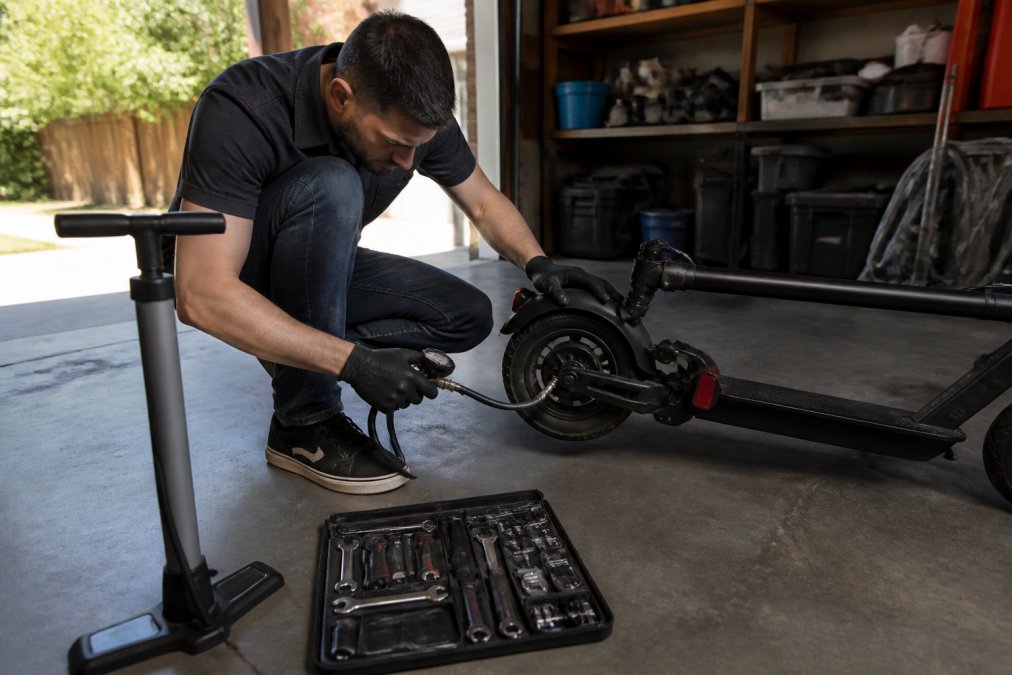
- Check tire pressure every two weeks. Underinflation increases rolling resistance, which drains range and generates heat in the tire sidewall; on tubeless tires it also raises the risk of a pinch flat. A basic gauge and a pump cost less than one replacement tire.
- Inspect brake pads monthly, especially with regenerative braking systems. Regenerative braking saves pad wear but does not eliminate it, and a worn pad on a small wheel can fail suddenly. Replace pads before they reach the metal backing.
- Wipe down the deck and stem to protect weatherproofing and IP-rated seals. Water ingress is the most common cause of controller and battery failure, and it usually happens gradually through compromised seals rather than a single soaking.
- Store the battery at roughly half charge if you won't ride for weeks. A fully charged or fully depleted battery left in storage degrades faster than one held near the middle of its range.
- Tighten stem and folding bolts regularly, since vibration loosens them. A loose folding mechanism is a safety issue, not just a rattle.
What Maintenance Actually Costs Over Time
The maintenance routine above is cheap; the parts it protects are not. Tires, brake pads, and especially the battery are the line items that determine whether a scooter is economical over its life. A battery typically represents a significant share of the original purchase price, and it is the single largest long-term cost you will face. That is why the maintenance habits above matter financially, not just mechanically: keeping the battery cool, avoiding full charges, and not letting it sit depleted can meaningfully extend how many years you get before replacement.
Legal Status, Safety Gear, and Insurance You Need to Know
Insurance and liability requirements are the angle most guides skip, and they carry real financial risk. In many regions, a scooter is not automatically covered by home or renters insurance, and a standard auto policy usually excludes it. That matters because an accident involving a pedestrian, a parked car, or another rider can leave you personally liable for medical bills or property damage. The practical step is a phone call to your insurer with two questions: does my existing policy cover a motorized personal vehicle, and what would a rider or standalone policy cost? That single call closes the biggest financial gap in most buying advice.
Theft Prevention and Long-Term Battery Degradation Costs
Two costs quietly erode the value of scooter ownership: theft and battery replacement. Scooters are light enough to carry away, which makes them a target.
Theft prevention strategies that actually work:
- Use a quality U-lock through the frame, not a cable lock
- Park in visible, well-lit areas or secured bike rooms
- Take the scooter inside whenever you can fold and carry it
- Register the serial number and keep proof of purchase
Conclusion: Who Should Buy an Electric Scooter?
The people who get the most from an electric scooter are urban commuters with short, mostly flat routes, students crossing a campus, and anyone replacing a slow or costly last-mile leg of a journey. The people who regret it are those with long commutes, steep hills, heavy cargo needs, or no secure storage.
Frequently Asked Questions
What are the downsides of owning an electric scooter?
The main downsides are limited range on cheaper models, battery degradation over time, and maintenance costs like tire replacements and brake adjustments. You also need to consider weather limitations, since most scooters aren't fully waterproof, and the risk of theft in urban areas. Local laws may restrict where you can ride, and safety gear like a helmet is essential. Insurance and liability coverage can add to your total cost of owning an electric scooter.
What is the average lifespan of an electric scooter?
Most electric scooters last between two and five years, depending on build quality, usage frequency, and how well you maintain them. The battery is usually the first component to degrade, often losing 20-30% of its capacity after 500 to 800 charge cycles. Following electric scooter maintenance tips like storing the battery at 50-80% charge and avoiding extreme temperatures can extend its life significantly.
Do electric scooters save money on commuting?
They can. Electric scooters cost far less to charge than paying for petrol, parking, or public transport fares over time. A full charge typically costs a few cents and covers 20-40 kilometres on mid-range models. However, you need to factor in the upfront purchase price, maintenance, and potential insurance. The cost of owning an electric scooter often pays off within a year if you replace a daily car or transit commute.
What are the most common problems with electric scooters?
Flat tires, brake wear, battery capacity loss, and loose folding mechanisms are the most frequent issues. Cheaper models with pneumatic tires are prone to punctures, while tubeless tires reduce that risk. Motor controllers can overheat on steep hills with heavier riders. Regular checks on tire pressure, braking system, and suspension help prevent bigger failures. Choosing a scooter with a higher weight capacity and quality components reduces these problems.
Buying an electric scooter is a good idea when your route, budget, and storage actually fit the way a scooter works. If they do, Next Pair Rides has a model built for your ride, from lightweight commuters to dual-motor performance machines with reliable battery capacity and tubeless tires. Continue shopping with Next Pair Rides and get moving with confidence.