

Table of Contents
- Start with Your Route: A Practical Framework for How to Choose an Electric Scooter for City Travel
- Electric Scooter Range for Commuting: Real-World Planning and Battery Basics
- Motor Power and Hill-Climbing Ability for City Terrain
- Lightweight Electric Scooter for Adults: Portability, Folding, and Multimodal Commutes
- Electric Scooter Safety Features: Brakes, Lights, and Wet-Weather Riding
- The Best Electric Scooter for Commuting: Matching Models to Your Route
- City Rules, Parking, and Ownership Costs: What Commuters Miss
- Conclusion: Your Next Steps to Choosing an Electric Scooter for City Travel
- Frequently Asked Questions
Last Updated: October 16, 2026
Start with Your Route: A Practical Framework for How to Choose an Electric Scooter for City Travel
Most buyers pick a scooter by top speed, then discover the motor can't handle their actual hill. Choosing an electric scooter for city travel means matching motor power, battery range, and weight to the streets you ride every day, not the numbers that look best in an ad.
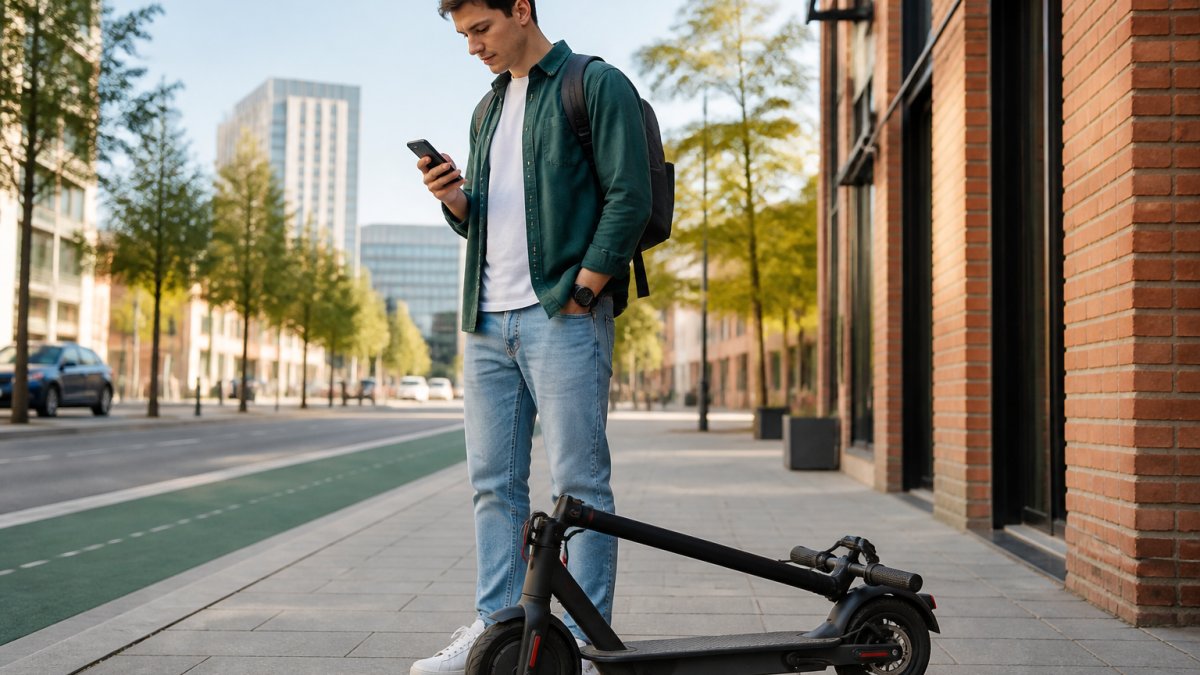
At Next Pair Rides, we see the same pattern in customer questions: riders want a scooter that climbs their commute hill, lasts their full route, and folds small enough for a train or office corner.
Here's the framework we recommend:
- Map your one-way distance and add a 30% buffer for wind, hills, and cold.
- Identify the steepest climb on your route and note how long it lasts.
- Decide whether you need to carry the scooter onto transit, up stairs, or into a lift.
- Check your city's rules on speed limits and where scooters may legally ride.
- Match motor wattage and battery capacity to the answers above.
Electric Scooter Range for Commuting: Real-World Planning and Battery Basics
Manufacturer range figures assume a lighter rider, flat ground, mild weather, and a steady cruising speed. Real-world range for commuting typically runs lower, so plan your daily route around a battery buffer rather than the headline number.
Battery capacity is measured in volts and amp-hours (V and Ah). Watt-hours (Wh) are the number that actually compares packs: multiply volts by amp-hours.
What actually eats your range:
- Rider and cargo weight. Heavier riders draw more current to hold the same speed, especially on climbs.
- Hills. A sustained grade can cut usable range noticeably compared with the same distance on flat ground.
- Speed. Range drops as speed rises, because air resistance grows quickly. Cruising a few mph below top speed usually adds meaningful distance.
- Temperature. Cold weather reduces usable capacity, so winter range is shorter than summer range on the same pack.
- Stop-start traffic. Repeated acceleration from a standstill uses more energy than steady cruising.
- Tyre pressure. Soft tyres increase rolling resistance and drain the battery faster.
A simple planning method:
- Measure your one-way commute distance.
- Double it for the round trip.
- Add a 30% buffer for wind, hills, cold, and detours.
- Compare that total to the scooter's estimated range, and treat the estimate as an optimistic ceiling, not a guarantee.
- If your buffered number is close to the estimate, size up to the next battery.
Charging time matters too. Most commuter scooters need several hours for a full charge, so overnight charging fits a daily routine better than a mid-day top-up.
A few habits protect your range and battery life:
- Charge to full before long rides rather than relying on partial top-ups.
- In cold weather, expect reduced capacity and plan a shorter route.
- Keep tyres at the recommended pressure.
- Store the scooter indoors in extreme heat or cold when possible.
- Avoid leaving the pack at 0% or at 100% for long periods when it is not in use.
The DT01 carries a 36V 10.4Ah battery with an estimated range of 19-25 miles per charge.

Motor Power and Hill-Climbing Ability for City Terrain
Motor wattage determines how well a scooter climbs hills and accelerates from a stop. A 400W motor suits flat routes and lighter riders; steeper grades and heavier riders need more.
Rated power and peak power are different figures. A motor rated at 400W may peak near 756W for short bursts, which helps on a steep block but isn't meant to hold indefinitely.
| Model | Rated Motor | Estimated Range | Max Rider Weight | Scooter Weight |
|---|---|---|---|---|
| DriveTron DT01 | 400W | 19-25 miles | 265 lb | 40.8 lb |
| DriveTron DT08 | 500W | 25-37 miles | 265 lb | 48.5 lb |
| DriveTron DT10 | 1,200W | 28-40 miles | 265 lb | Not listed |
Heavier riders should size up rather than gamble on a smaller motor. A common mistake is buying the lightest, cheapest option, then finding it bogs down on the one hill that matters every morning.

Lightweight Electric Scooter for Adults: Portability, Folding, and Multimodal Commutes
Portability comes down to two numbers: scooter weight and folded dimensions. If you carry your scooter onto a train, bus, or up stairs, weight is the spec you'll feel every single day.
The DT01 weighs 40.8 lb and folds for storage between rides. The DT08 weighs 48.5 lb and measures 47.2 × 25.6 × 49.2 inches unfolded. The DT10 is larger again at 49.6 × 26.4 × 51.2 inches unfolded.

For a multimodal commute, check three things before buying:
- Can you lift the folded scooter comfortably for the length of your walk?
- Does it fit the rack, corner, or locker you'll store it in?
- Does the folding mechanism lock securely so it doesn't unfold in transit?
A 40 lb scooter is manageable for a short platform walk. A 48 lb model is better suited to riders who mostly roll it rather than carry it.
Electric Scooter Safety Features: Brakes, Lights, and Wet-Weather Riding
Braking and visibility decide how safe a scooter is in traffic, especially in rain or after dark. Look for two independent braking systems and lights bright enough to be seen, not just to see.
DriveTron DT01 Electric Scooter – 400W, 36V 10.4Ah →
The DT01, DT08, and DT10 all pair electronic braking with a front disc brake, which gives you a fallback if one system fades. The DT10 adds front and rear suspension, which helps stability on uneven road surfaces.
Wet-weather riding deserves caution. Pneumatic and tubeless tyres grip better than solid tyres on slick roads, but no scooter tyre eliminates hydroplaning risk. Reduce speed, brake earlier, and avoid painted road markings when the surface is wet.
The Best Electric Scooter for Commuting: Matching Models to Your Route
The best electric scooter for commuting is the one that fits your distance, hills, and storage situation, not the one with the highest top speed. Match the model to the route, and the choice becomes straightforward.
Here's how we'd match them:
- Short, flat commute, need to carry it: DT01, at 40.8 lb with a 400W motor and 19-25 mile estimated range.
- Medium commute with moderate hills: DT08, with a 500W motor, 25-37 mile estimated range, and a 265 lb rider limit.
- Longer commute or steeper climbs: DT10, with a 1,200W motor, front and rear suspension, and a 28-40 mile estimated range.
All three ship from a U.S. warehouse, and every model lists a 265 lb maximum rider weight. If you're near that limit and your route has hills, the DT10's higher rated wattage is the safer pick.
City Rules, Parking, and Ownership Costs: What Commuters Miss
Most buying guides stop at the spec sheet. The factors that decide whether a scooter actually works for your city, where you may legally ride it, where you can safely leave it, and what it costs to keep running, rarely get covered. Here is how to work through all three before you buy.
Check your city's rules before you buy
Rules vary widely by city and they change, so verify with your local transport authority rather than relying on a forum post. The questions worth answering:
- Where may you ride? Many cities restrict scooters to bike lanes and roads and prohibit riding on pavements, while others allow limited pavement use. Confirm which applies to you.
- What is the speed limit? Some cities cap scooter speed on shared paths or in pedestrian zones, which can make a high-top-speed model unnecessary.
- Are helmets required? Requirements differ by age and by city. Check the rule for your situation before your first ride.
- Is transit access allowed? Some rail and bus systems permit folded scooters; others restrict them at peak times or ban them outright. Check before you plan a multimodal commute.
- Is registration or insurance required? A minority of jurisdictions require one or both. Confirm so you are not caught out.
Recheck the rules if you move, change jobs, or if your city updates its guidance, micromobility regulation is still evolving in many places.
Secure parking and theft prevention
A scooter left on a busy pavement can be ticketed or removed, and theft is a real risk in dense areas. Plan for both:
- Lock compatibility. Look for a frame or stem that a sturdy U-lock or chain can pass through. Not every scooter has an obvious locking point, so check before buying.
- Removable batteries. A pack you can take with you reduces the value left on the street and makes charging at a desk or locker practical.
- Where you will park. Prefer racks, secure rooms, or spots within sight. Avoid leaving a scooter overnight in public if you can bring it inside.
- Transit stops. If you combine scooter and train, check whether the station has secure storage or whether you must carry the folded scooter with you.
Ownership costs over time
Purchase price is only the start. Budget for:
- Replacement tyres and inner tubes
- Brake pads and periodic servicing
- A lock and, if you ride at night, better lights
- Battery replacement after several years of use
- Charging electricity, which is minor compared with fuel
Tubeless tyres, like the 10-inch tubeless tyres across our lineup, generally reduce puncture frequency compared with traditional tube setups, which cuts long-term maintenance. Warranty coverage also varies by model, so check what is included before you buy.
Conclusion: Your Next Steps to Choosing an Electric Scooter for City Travel
The right scooter for your commute is a match, not a maximum. Map your route, size the motor to your hills, and weigh the scooter against how you'll actually carry it.
Next Pair Rides builds its lineup around exactly that range of needs, from the 400W DT01 for short, flat rides to the 1,200W DT10 with front and rear suspension for longer, hillier commutes. Every model ships from a U.S. warehouse with 10-inch tubeless tyres and a 265 lb rider limit.
Continue shopping at Next Pair Rides and find the model that fits your daily route.
Frequently Asked Questions
What should I look for when buying an electric scooter for commuting?
Focus on four specs: real-world range that exceeds your round trip by 30-40%, motor power that handles your steepest hill with your weight on board, a weight you can actually carry up stairs or onto transit, and safety features like disc brakes and lights. The DriveTron DT08 offers a 500W motor, 25-37 mile estimated range, and 48.5 lb weight, which suits moderate city commutes. Always test a scooter's folded dimensions against your storage space before buying.
How much range do I need for a city commute?
Calculate your round-trip distance, then add 30-40% as a buffer for hills, cold weather, and battery degradation over time. If your commute is 8 miles each way (16 miles total), look for a scooter rated at 22-25 miles or more. The DriveTron DT10's 52V 18Ah battery delivers a manufacturer-estimated 28-40 miles, giving ample headroom for longer routes. Real-world range drops with rider weight, terrain, and temperature, so never buy a scooter that exactly matches your commute distance.
Are pneumatic or solid tires better for urban riding?
Pneumatic (air-filled) tires absorb bumps and provide better grip on uneven city streets, but they can puncture. Solid tires never go flat but transmit more vibration to the rider. Tubeless pneumatic tires, like the 10-inch options on the DriveTron DT01 and DT08, combine puncture resistance with comfort. For city commutes with mixed road surfaces, tubeless pneumatic tires are the practical choice. They handle potholes and cobblestones better than solid alternatives.
Is an electric scooter practical for a daily commute?
Yes, for commutes under 10 miles each way with adequate bike lanes or low-traffic streets. An electric scooter eliminates parking costs, avoids traffic congestion, and costs pennies per charge compared to fuel or transit fares. The key is matching the scooter to your route: a lightweight model like the DT01 (40.8 lb, 19-25 mile range) works for short campus or last-mile trips, while the DT10 (1,200W, 28-40 mile range) handles longer, hillier commutes. Check local regulations before riding.